
Ever catch a glimpse of yourself in the mirror and feel like the reflection doesn’t quite match the energy you carry? Aging has a way of subtly shifting our features, often leaving behind sagging skin, deeper lines, and a less defined jawline. Dr. Bassiri in New York specializes in facelift procedures that restore natural contours, creating a refreshed appearance that feels like you, just more vibrant. Curious about how a facelift works? Let’s start with the basics.
What Is a Facelift?
A facelift, or rhytidectomy, is a surgical procedure that lifts and tightens facial tissues to restore a more refreshed appearance. As we age, skin loses elasticity, fat pads shift downward, and bone structure changes, leading to sagging, jowls, and deeper folds. A facelift helps counter these effects by repositioning tissues, smoothing creases, and removing excess skin.
What a Facelift Can Improve:
- Defines the Jawline: Reduces sagging and softens jowls.
- Smooths Deep Folds: Softens lines around the nose and mouth.
- Restores Volume: Repositions tissues for natural fullness.
- Enhances Facial Balance: Refines proportions for a youthful look.
Dr. Bassiri specializes in the deep-plane facelift, targeting the SMAS layer beneath the skin. This technique releases tether points, allowing for natural movement and long-lasting results with minimal tension on the skin, reducing visible scarring.
You can see how that approach reads across different faces and ages in the facelift gallery.
Next, we’ll cover what to expect during your consultation and how to prepare for a facelift step by step.
What to Expect During Your Facelift Consultation
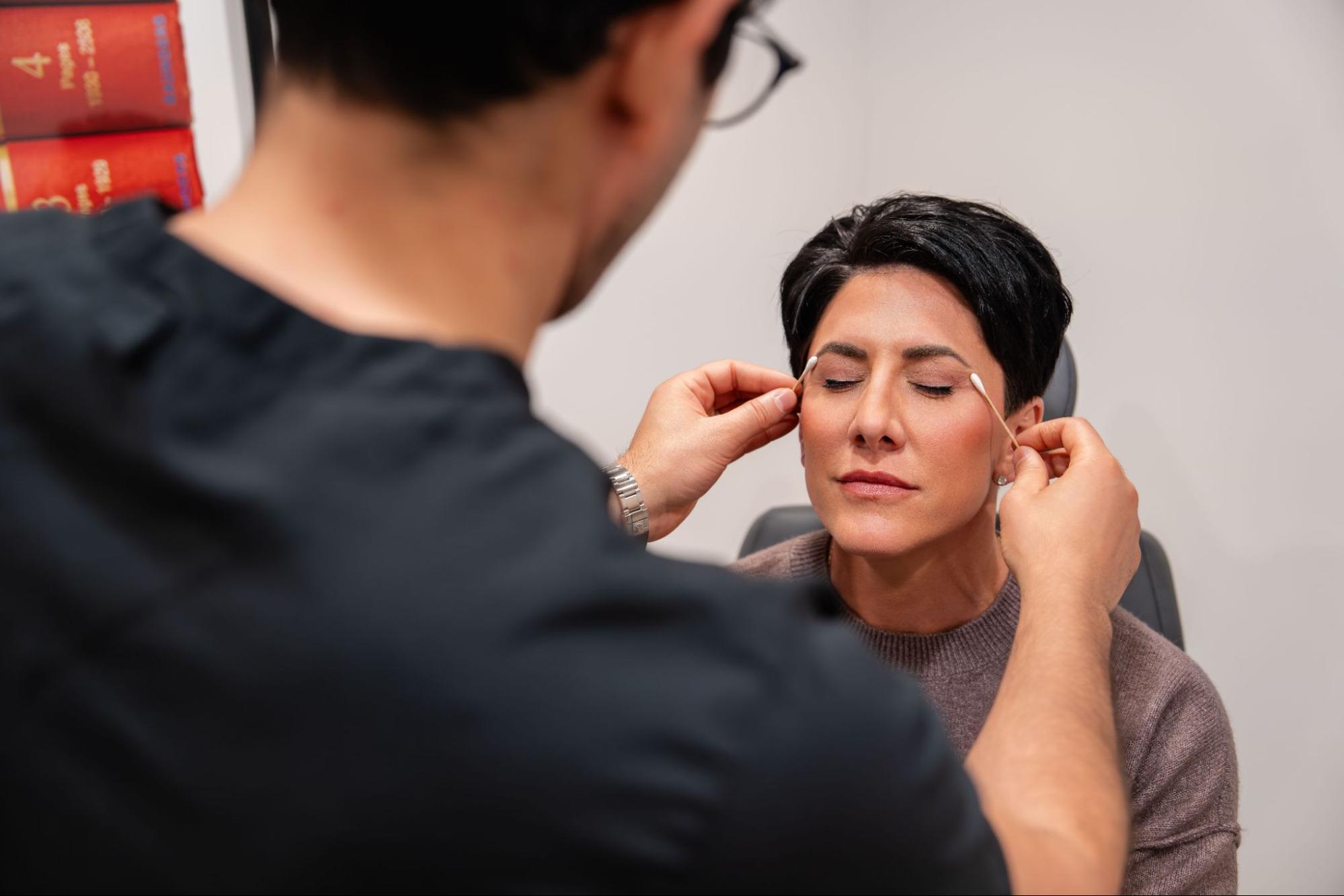
Your facelift transformation begins with an in-depth consultation with Dr. Bassiri, where the focus is on understanding your goals and creating a personalized treatment plan. This appointment is an opportunity to share what’s been bothering you and explore how a facelift can help refresh your appearance.
Medical History Review
Dr. Bassiri will ask about past procedures, current health conditions, medications, and any history of smoking or alcohol use, as these factors can affect healing.
Facial Assessment
A thorough examination of your facial structure, skin elasticity, and fat distribution helps identify the best approach. Photos may be taken to assist in surgical planning.
Open Discussion
This is your chance to express your concerns and desired outcomes. Dr. Bassiri will offer honest feedback, explaining what’s possible and setting realistic expectations.
Questions Worth Bringing With You
Patients who get the most out of a consultation tend to arrive with a short list rather than a general sense of dissatisfaction. A few that come up often:
- Which technique are you recommending for me specifically, and why that one?
- What will my incisions look like once they have healed?
- How much time should I realistically block off before I am back in front of people?
- Is there anything about my anatomy that makes this more or less predictable?
Bringing photos of yourself from ten or fifteen years ago is also more useful than most people expect. It gives a clearer target than a photo of someone else’s face.
This collaborative conversation helps ensure that your facelift plan aligns perfectly with your aesthetic goals. Up next, we’ll walk through how to prepare for your procedure.

Preparing for Your Facelift
Preparation is a vital part of the facelift process, setting the stage for a smoother procedure and recovery. Dr. Bassiri will provide personalized pre-surgery instructions, but here’s what you can generally expect in the weeks leading up to your procedure.
2 to 3 Weeks Before Surgery:
- Medication Adjustments: You may need to pause certain medications, especially blood thinners, as directed by Dr. Bassiri.
- Lifestyle Changes: Avoid nicotine products for 2 to 3 weeks and alcohol for at least one week before surgery, as these can affect healing.
- Medical Clearances: In some cases, lab tests or an EKG may be recommended to ensure you’re ready for surgery.
The Day Before Surgery:
- Refrain from eating or drinking after the time specified by Dr. Bassiri’s team.
- Gather loose, comfortable clothing that doesn’t need to be pulled over your head.
Surgery Day Essentials:
- Arrive makeup-free, without jewelry or hair products.
- Bring someone to drive you home and assist you during the first 24 hours.
Two things are worth sorting out before the week of surgery rather than during it. Set up wherever you plan to rest with extra pillows so you can keep your head elevated without thinking about it, and fill any prescriptions in advance. Neither is difficult, but both are far more annoying to handle while you are swollen and tired.
With your preparation complete, it’s time to head into the procedure itself. Here’s what to expect on surgery day.
What to Expect on the Day of Your Facelift
The day of your facelift is all about setting the stage for a smooth procedure and a successful outcome. Dr. Bassiri and his team will ensure you’re comfortable and fully prepared from start to finish. Procedures are performed at our on-site surgery center, which keeps the whole day in one place rather than sending you across the city.
Before the Procedure
- Final Check-In: You’ll meet with Dr. Bassiri to review the surgical plan and address any last-minute questions.
- Anesthesia: Depending on your case, Dr. Bassiri may use twilight anesthesia, which keeps you relaxed and comfortable without the deeper effects of general anesthesia.
During the Procedure
- Incision Placement: Incisions are carefully made around the hairline and natural contours of the ear to keep scars discreet.
- Tissue Repositioning: Dr. Bassiri works beneath the surface, lifting and adjusting the SMAS layer for natural-looking results. Excess skin is removed, and the remaining skin is gently re-draped.
- Finishing Touches: Incisions are closed with fine sutures, and dressings are applied to support initial healing.
Once your procedure is complete, you’ll move to a recovery area before heading home with post-operative care instructions. Next, we’ll cover what you can expect during the recovery process.
Facelift Recovery
Recovering from a facelift is a gradual process, and understanding what to expect can help you feel more confident as you heal. Dr. Bassiri provides detailed post-operative care instructions to support a smooth recovery and optimal results.
Immediately After Surgery
After surgery, you’ll rest briefly in a recovery area before heading home with a trusted companion to support you during the first 24 hours. It’s normal to experience some swelling, bruising, numbness, and mild drainage as your body begins to heal. To help manage swelling, keep your head elevated, even while sleeping, and apply cold packs gently to the affected areas for added comfort.
The First Week
The day after surgery, you’ll meet with Dr. Bassiri for a follow-up to remove any drainage tubes, refresh your dressings, and assess your healing progress. Based on how you’re recovering, you may switch from bandages to a facial sling within a few days, providing added support as your face continues to heal.
Beyond the First Week
About a week post-surgery, sutures are typically removed, and Dr. Bassiri will assess your incisions. Swelling and bruising will continue to subside over the next few weeks, with more defined results becoming noticeable as your face settles. Most patients feel comfortable resuming light activities within two weeks, though full results take a few months to develop as residual swelling fades.
With time, patience, and proper care, your refreshed appearance will continue to evolve, revealing natural-looking results that you can feel confident about for years to come. For a broader look at how healing works across different facial procedures, our guide to recovery after facial surgery covers the same ground for the rest of the face.

Facelifts Are Rarely Done Alone
A facelift addresses the lower face and jawline, which means it can leave the upper face looking untouched by comparison. That is why many patients combine it with work above the cheekbones.
An endoscopic midface lift restores volume across the cheeks and softens the nasolabial folds, which pairs naturally with the jawline definition a facelift creates. Eyelid surgery is another common pairing, since heavy upper lids and under-eye hollowing tend to draw attention once the rest of the face looks rested. Combining procedures means one anesthetic and one recovery rather than repeating both.
Whether that makes sense for you is a conversation for the consultation. Some patients need only the lower face, and Dr. Bassiri will say so rather than adding to the plan.
Facelift FAQs
What is the SMAS layer, and why does it matter?
The SMAS is a sheet of muscle and connective tissue sitting underneath the skin of the face. Older techniques pulled on the skin itself, which is what produced tight, obviously operated results. Working at the SMAS level lifts the structure that actually sagged and lets the skin settle over it naturally, with far less tension on the incisions.
Am I too young for a facelift?
Age matters less than what is happening in your tissue. Some patients in their forties have enough laxity along the jawline to benefit clearly, while others in their sixties are better served by volume restoration or a midface lift first. Dr. Bassiri will tell you if a facelift is premature for your anatomy rather than scheduling one because you asked.
Can a facelift be done under twilight anesthesia?
In many cases, yes. Twilight anesthesia keeps you relaxed and comfortable without the deeper effects of general anesthesia, and it suits patients who are uneasy about being fully under. Whether it is appropriate depends on the extent of the surgery and your medical history.
Can a facelift be combined with other facial procedures?
Yes, and it often is. An endoscopic midface lift or eyelid surgery are the most common pairings, since a facelift alone can leave the upper face looking out of step with the refreshed lower face. Combining means one anesthetic and one recovery instead of two.
Rediscover the Reflection You Love
A facelift can bring out the version of you that’s been there all along, just waiting beneath the surface. Dr. Bassiri’s approach focuses on natural refinement, restoring the contours and vibrancy that time may have softened. If you’re ready to feel at home in your reflection again, schedule a consultation with Dr. Bassiri at our Manhattan office and start your path toward timeless confidence.