
Manhattan Tip Stitch® Rhinoplasty
Refine your nose
Tip Stitch® Rhinoplasty with Dr. Michael Bassiri-Tehrani is a specialized procedure focused on refining the nasal tip to create a more balanced, symmetrical appearance.
Dr. Bassiri expertly performs this minimally invasive technique, offering natural-looking results without the need for extensive surgery.
Professional, attentive and wonderful
Dr. Bassiri and his team are professional, attentive and wonderful to work with. His bedside manner is fantastic, you can tell he truly cares about his patients. From consult to follow up, and everything in between, I really enjoyed my experience with Dr. Bassiri and would absolutely recommend his practice.
 Micaela H. a week ago

What is Tip Stitch® Rhinoplasty?
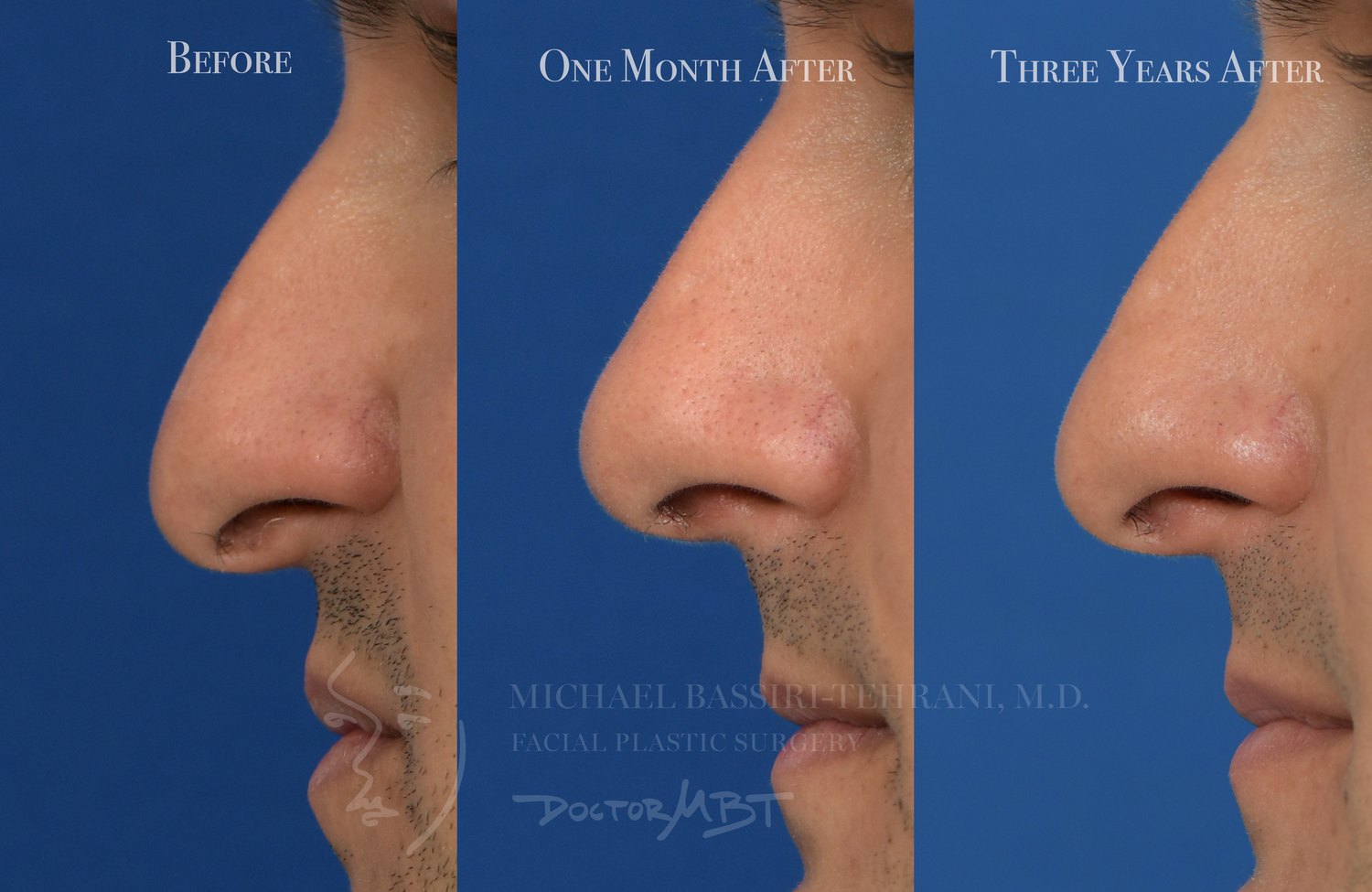
Tip Stitch® Rhinoplasty is a minimally invasive rhinoplasty procedure that is done in around 30-45 minutes awake with local anesthesia. It is performed through smaller internal incisions and is meant to stabilize, lift, and project the nasal tip using advanced suture techniques. Unlike thread-lifting, which pulls on skin, a Tip Stitch® Rhinoplasty targets and supports the structural cartilage of the nose using specific surgical rhinoplasty techniques without the dissection and trauma of a full rhinoplasty surgery.
Most of the natural attachments of the nose remain intact, so it is unlikely to produce a radically different or artificial appearance. The overall spirit of the nose is preserved. In short, patients can expect to look like themselves just with a more stable, slightly more lifted nasal tip.
By targeting one aspect of the nose without dismantling the rest, we avoid much of the variability and uncertainty that comes with full rhinoplasty. The potential for aesthetic complications such as deviations, dents, and narrowing is limited, as most of the natural nose is intact. Usually, if the intended result is not met, the nose may look similar to before the procedure, and patients may elect to move on to a larger surgery. The amount of scar tissue that is formed after the procedure is also limited, so the ability to have additional surgery is generally not compromised.
Patients who seek a more dramatic change to the shape of their nose, or who want more done to the tip than a small lift, are encouraged to discuss more comprehensive rhinoplasty surgery. Open or closed rhinoplasty, possibly using cartilage grafts, still remains a better option for changes beyond a small lift.
What causes weak nasal tip support?
Some of the causes of weak nasal tip support include age, inherent cartilage shape and stiffness, previous nasal surgery (especially closed rhinoplasty or septoplasty), and prior trauma.
Previous Surgery:
Nasal surgery is often performed with incisions that can destabilize the attachments of the nasal tip to the rest of the nose, particularly if a transfixion incision was used. That type of incision is common in septoplasty and closed rhinoplasty surgery. If support is not reintroduced at the time of surgery, tip support will weaken over time and can cause some drooping. Even if maneuvers were taken to support the tip, they may change over time. This is why many rhinoplasties can change over many years after initial surgery.
Aging:
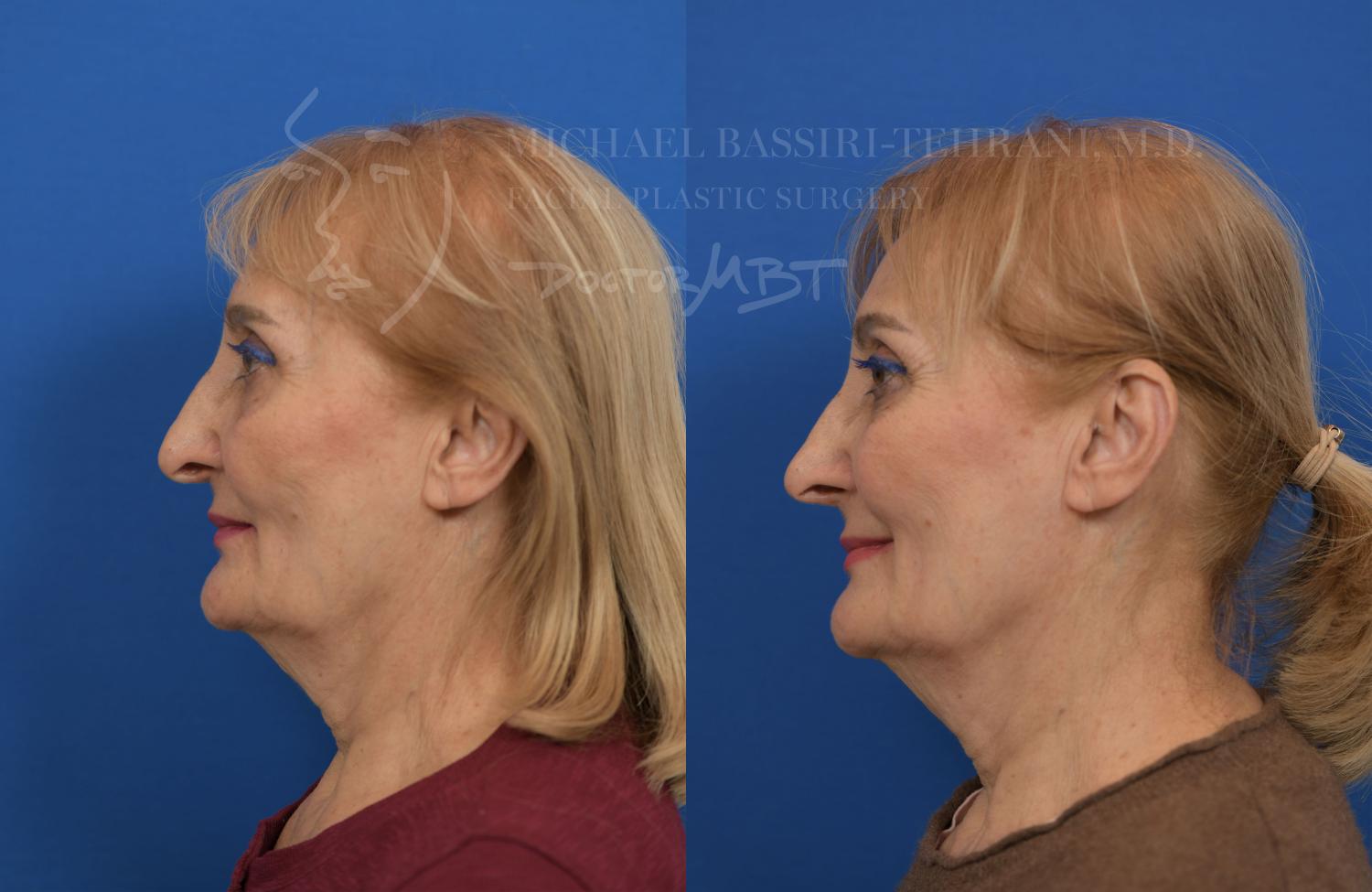
Aging does not affect everyone the same. In general, as we age, especially from the 40s on, our cartilages progressively weaken. The cartilage posts that keep the tip up can buckle and cause the nose to hook. Additionally, there is a muscle that is constantly pulling the nasal tip down when smiling, which continues to stretch the nose in that direction. Patient will often notice that their nasal tip has dropped over the years. Tip Stitch® Rhinoplasty has been a nice maneuver to restore the youthful appearance of the nose and face without transforming it or undergoing larger surgery. This is especially nice for patients who have other aging face concerns and priorities. The procedure can be done quickly, and it is easy to combine with other surgeries, compounding overall anti-aging results.
Inherent Cartilage Strength:
Everybody has nasal tip cartilages that vary in shape and stiffness due to genetics and nutrition. Certain patients may notice that older members of their family have a more hooked appearance to their nose and want to prevent that from happening. The medial crura are the portion of the nasal tip cartilages that are responsible for supporting the tip up. This is what is engaged during the procedure. Particularly weak medial crura may require additional cartilage grafting to enhance projection and lift.
Trauma:
Nasal trauma, especially trauma that causes a caudal septal deviation, may unseat the normal position of the tip, supporting ligaments in the nose, and cause the tip to drop. Overly deviated noses may not be a good candidate for a Tip Stitch®, but in certain cases securing the nasal septum may have some benefit. Micro traumas, such as extensive facemask wearing (COVID-nose) that puts pressure on the nasal tip and pulls it downward, may have some effect on how the nasal tip changes over time.
What is the difference between Full Rhinoplasty, Tip-only Rhinoplasty, and Tip Stitch®?
The main difference between Tip Stitch®, tip-only rhinoplasty, and total rhinoplasty lies in the scope of the procedure.
Tip Stitch® Rhinoplasty focuses solely on lifting, projecting, and stabilizing the nasal tip as one unit (en-bloc). When performed alone, it does not change the shape of the tip. The one-dimensional nature of the procedure makes it comfortable to perform with patients awake using numbing injections.
Tip-only rhinoplasty, also commonly referred to as a “tip-plasty”, is a limited version of a traditional full rhinoplasty. It is limited to the nasal tip and better addresses structural imbalances, asymmetries, and roundness/bulbosity. It typically involves cartilage trimming, grafting, and reshaping via either an open or closed rhinoplasty approach. It can be done awake or under general anesthesia depending on the scope of work that is needed. To make these changes, the tip cartilages need to be released from their attachments to a greater extent than a Tip-Stitch®, which results in more swelling. In general, because the bridge and bones are left alone, there is less swelling and bruising than a total or full rhinoplasty.
Total rhinoplasty is a comprehensive procedure that reshapes the entire nose, addressing concerns such as a dorsal hump, crooked nasal bridge, or breathing issues like a deviated septum. Total rhinoplasty is recommended for more significant changes to the appearance and function of the nose. By addressing the entire nose, each part of the nose can be adjusted to match and harmonize with the rest. While it offers dramatic results, it involves more extensive surgery and a longer recovery period.
How is Tip Stitch® different from non-surgical rhinoplasty or thread-lifting?
Non-surgical rhinoplasty refers to injecting fillers, usually hyaluronic acid (eg: Restylane), to the nose to change its shape. Fillers last up to a year and carry with them risks of vascular occlusion or even vision loss, something that is more of a concern when injecting in the nose. The filler can also migrate and bind water, causing the nose to look bulkier or fuller.
Thread-lifting uses barbed sutures (either dissolvable or permanent) placed just under the skin to pull the nasal tip up. The problem with this technique is the results typically do not last as the skin stretches over the course of months to years. Additionally, the excessive foreign material, which spans the length of the nose, has a tendency to cause swelling and infection. The scar tissue internally makes it difficult to have surgery after as well.
Tip Stitch® is a mini-surgical rhinoplasty through small incisions inside the nose that rotates and supports the nasal tip by securing tip cartilages to the firm septal cartilage. Often this improves the appearance of the bridge secondarily by bringing the tip in line with the bridge or creating a supra-tip break (dip before the tip). This is a known maneuver in surgical rhinoplasty adapted to be done in isolation and does not have the risks of filler or threads. It can optionally be paired with filler placed in the nasal bridge if desired.
What to expect for the procedure
The experience is similar to a dental procedure. Typically, Tip Stitch® takes less than 45 min and is done in our exam rooms with numbing injections.
After the nose is anesthetized, patients may feel some tugging but generally do not feel anything sharp. There is minimal bleeding, and the incisions get closed with dissolvable sutures that are not visible. Patients usually do not need narcotics or anxiety medications during or after the procedure and can go home without an escort if they do not take those meds.
Who is a candidate?
Candidates for a Tip Stitch® are busy patients who are looking for a small enhancement without a large transformation. They overall like the shape of their nose, don’t want people to know they had something done, and they do not want to take a week off of work. They may feel like their nasal tip has dropped over time, or pulls down too much when they smile. They may have had rhinoplasty before but now feel like the tip has changed. It may be a good option for patients who are afraid of anesthesia, nasal fillers, or threadlifts.
The goal of a Tip Stitch® is to add support to noses that have poor overall tip support. Patients who can easily push their nasal tip down, or notice their tip plunge when smiling, are likely to have weak nasal tip support. Nasal tips that feel particularly spongy, have a hooked appearance, or hang low in the middle of the nostrils (columella) may see a more dramatic change compared to those who are closer to their desired rotation.
In general, the best patients for a Tip Stitch® are those who are overall happy with the shape of their bridge and only want a slight lift of the tip, stabilization of the nose when smiling, or tucking of a columella that is hanging. This can be simulated by lifting the tip of your nose with your finger. Often, as the tip rotates up, the nose also gains some additional projection. This projection can reduce the overall convexity of the bridge and can balance the profile of the nose. Many patients who may think they have a “bump” on their bridge may be surprised to learn that it is rather a weak tip that is causing that appearance.

Tip Stitch® Rhinoplasty FAQs
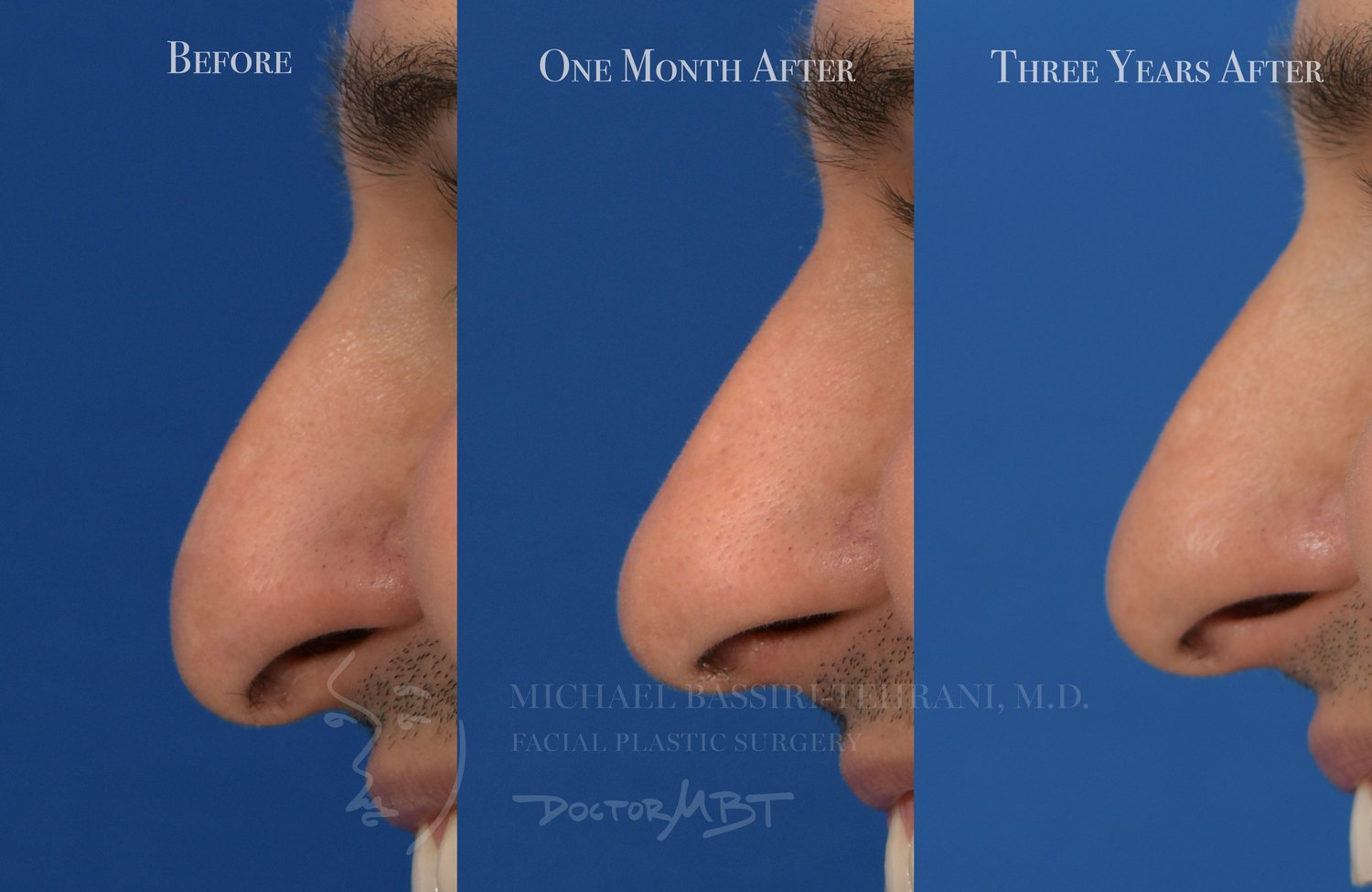
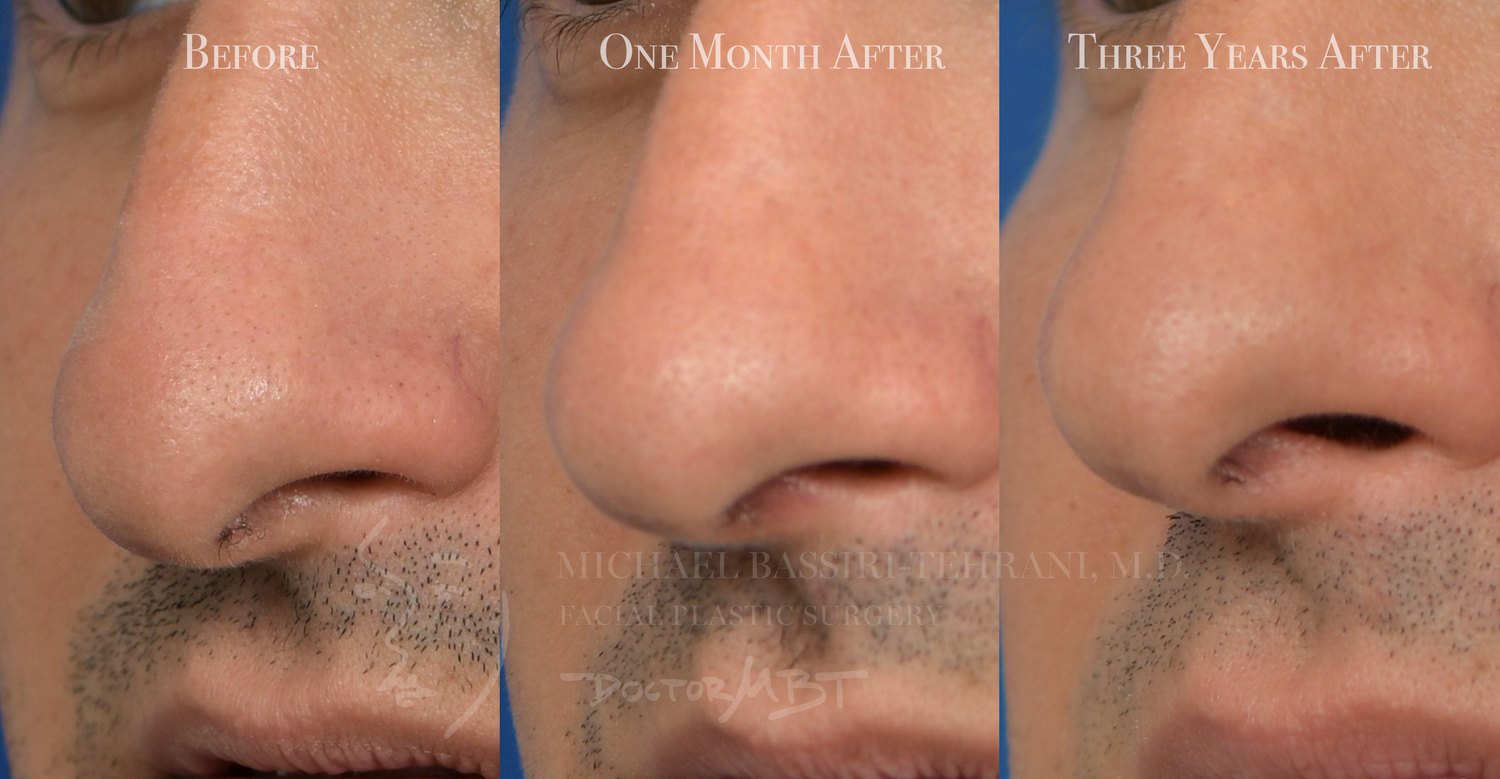
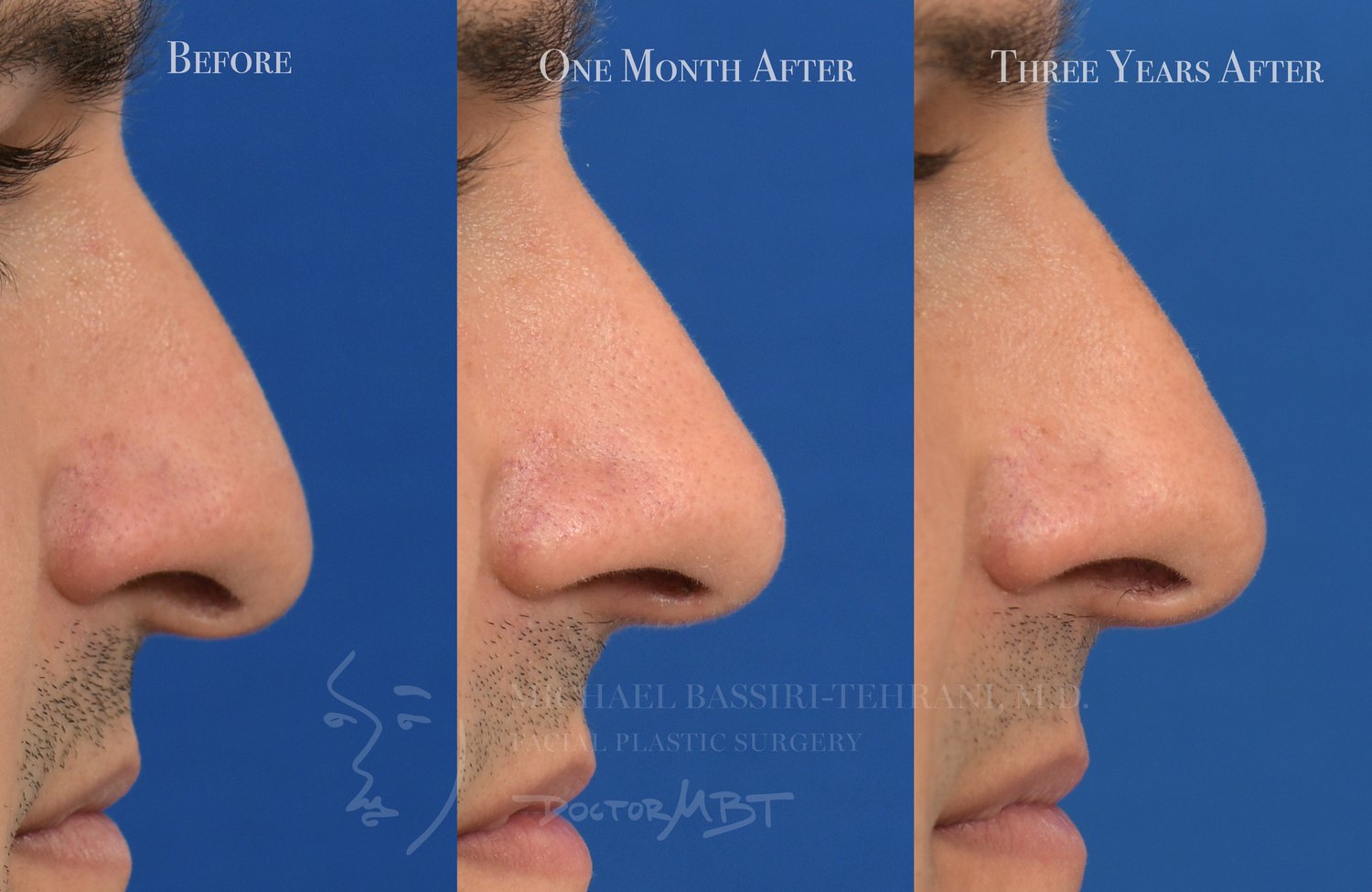
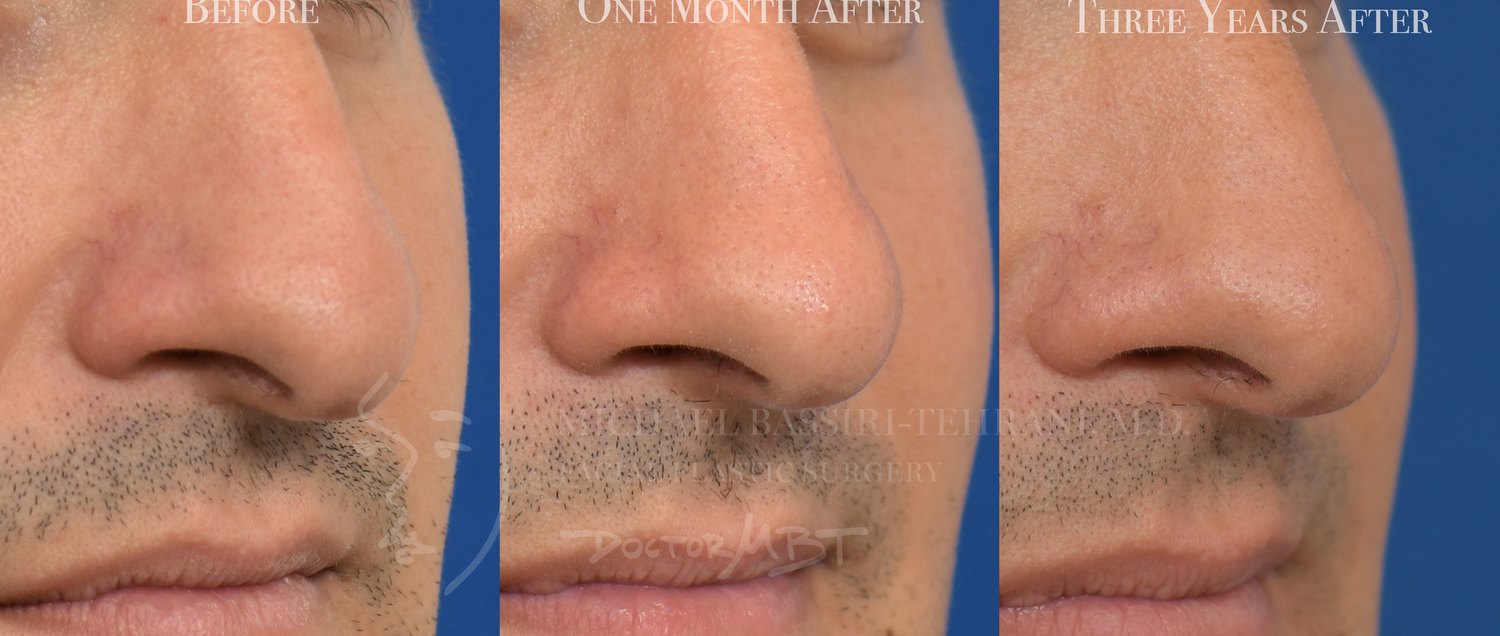
Long Term Follow Up
Dr. Michael Bassiri-Tehrani’s expertise in this technique ensures that changes to the nasal tip are subtle, natural-looking, and tailored to your unique facial features. He can help you determine which procedure is right for you based on your specific goals and desired outcome.